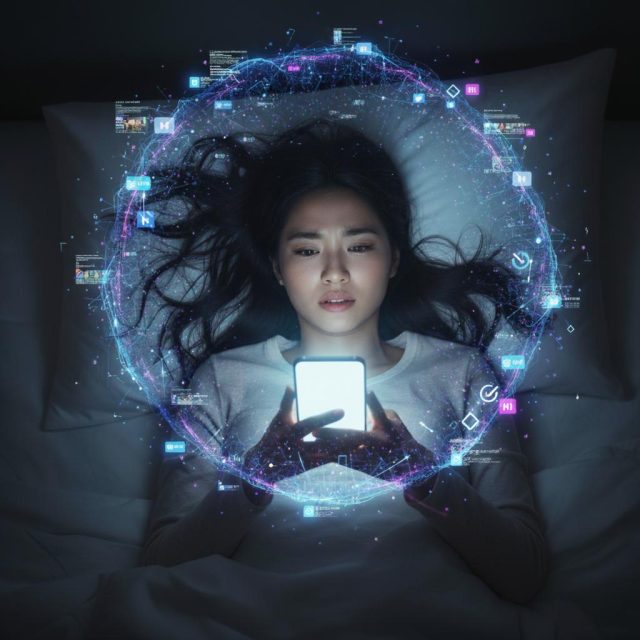
Alyssa, 24, creative and full of potential, begins her day every morning the same way: phone in hand, scrolling through Instagram. She sees friends traveling, celebrating promotions, or sipping coffee in picture-perfect cafés. At first, it feels harmless — just a bit of fun. But deep down, she starts to feel left behind. Her own day suddenly seems less exciting.
Even when Alyssa posts something herself — a photo with friends, a new outfit — she finds herself checking every few minutes to see how many likes she’s received. One evening, she realizes she’s been scrolling for nearly two hours. Her mind feels noisy, her body exhausted, yet she can’t put the phone down. “Why do I feel this way?” she wonders.
Have you ever felt like Alyssa? That strange mix of connection and emptiness after scrolling through social media?
Social media is one of the most powerful inventions of our generation. It connects us instantly, gives us access to endless information, and allows us to express ourselves creatively. But it also quietly reshapes how we see ourselves — and it deeply impacts our mental wellness.
Positive Impact on Mental Health
- Connection and Support: Social media helps us stay in touch with loved ones and maintain meaningful relationships, even across long distances. During the pandemic, it became a lifeline — offering comfort, community, and a sense of togetherness when physical connection wasn’t possible.
- Access to Resources: From mental health tips to educational content and inspiring stories, social media provides instant access to valuable information. It has also played a key role in reducing stigma around mental health by normalizing conversations and encouraging people to seek help.
- Self-Expression and Creativity: For many, social media is a space to express who they are — through art, music, writing, or storytelling. Sharing creative work can be healing, empowering, and deeply meaningful.
Clearly, social media has many benefits (for this article, we will focus more on the negative impact so that we can be aware of the dangers) — it connects, educates, and even empowers.
But like Alyssa, and so many of us, what begins as connection can quietly turn into comparison. Let’s explore what happens when social media starts to disturb our emotional balance.
Negative Impact on Mental Health
- The Comparison Trap: Scrolling through highlight reels of other people’s lives can make us feel inadequate. Online, we rarely see struggles — only polished moments. Constant exposure to “perfect” lives lowers satisfaction and fuels stress.
- Validation Anxiety: Every like or comment triggers dopamine, our brain’s reward chemical. Over time, we begin to crave that validation to feel worthy. When engagement drops, so does self-esteem.
- Sleep Disruption: Late-night scrolling exposes us to blue light and emotional stimulation, keeping the brain alert. Poor sleep worsens mood, focus, and overall well-being.
- Doomscrolling: The endless consumption of negative news feeds stress and hopelessness. Our brains never get the chance to rest or recharge.
- Fear of Missing Out (FOMO): Seeing others’ celebrations or achievements can make us feel left behind. FOMO drives compulsive checking, creating a loop of anxiety and dissatisfaction.
- Cyberbullying: Anonymity online can encourage cruelty. Harassment leaves invisible wounds that are just as real as physical ones, especially for teens.
- Erosion of Authentic Relationships: Quick reactions and emojis replace deep conversations. We’re “connected” more than ever, yet many feel lonelier. Empathy and presence decline as digital distraction takes over.
- Addiction and Attention Issues: Social media is designed to be addictive. Dopamine-driven feedback loops mimic gambling, leading to shorter attention spans and difficulty focusing.
The truth is, social media isn’t evil — it’s powerful. But power without awareness can hurt us. So how do we reclaim that power and protect our mental wellness?
Practical Strategies for Healthier Use
- Healthy Boundaries: Set time limits and take intentional breaks. Choose platforms carefully — not every app deserves your attention.
- Mindful Scrolling and Posting: Pause before posting: ask yourself why you’re sharing. Avoid comparing your behind-the-scenes to someone else’s highlight reel. Practice mindful scrolling — notice how content makes you feel.
- Balanced Lifestyle: Replace scroll time with soul time: journaling, exercise, or reflection. Prioritize connect time: real conversations, shared meals, and community. Reach out when overwhelmed — don’t carry the weight alone.
Social media isn’t inherently bad. It’s a tool — powerful, creative, and connective. But like any tool, it can harm when misused. Alyssa’s story is familiar because it’s ours too. The challenge is not to abandon social media, but to reclaim control: to scroll with awareness, to post with intention, and to live with balance.
When we set boundaries and choose depth over distraction, social media becomes less of a trap and more of a bridge — connecting us not just to others, but back to ourselves.
Written by:
Mr. Lee Teck Ming
(Psychotherapist and Relational Trauma Specialist)
 New Vision Counselling and Consultancy